
Many members of the ISMRM community develop customized software tools to solve problems in various aspects of MR sequence design, image reconstruction and data processing. The MR-Hub offers a platform where researchers can share their software solutions with the rest of the community - hopefully making more people aware of existing tools, allowing others to solve their own problems more rapidly by building on existing solutions. We encourage all members of the ISMRM community to follow the spirit of reproducible research, and consider making the code behind their publications available to share.
This page is managed by the Reproducible Research Study Group of the ISMRM - and we encourage anyone with suggestions for additions and improvements to get involved. The GitHub repository for managing this page is found here: https://github.com/ismrm/mrhub - where you can also find instructions for how to add your own package via a pull-request to the repository.
Please also see  for more crowd-sourced information related to open science and reproducibility within the MRI community.
This page was redesigned in this new GitHub format to coincide with ISMRM 2019 in Montreal.
-
 SNAKEDoing non-Cartesian MR Imaging has never been so easy.Category: SimulationPrincipal developers: Pierre-Antoine Comby, Caini PanKeywords: fMRI, simulation, k-space, BOLD, non-Cartesian, trajectories.Date added to MR-Hub: 2026-05-04Date software last updated: 2025-10-09No. of citations: 0(main associated paper on OpenAlex)
Description
SNAKE is a Simulator from Neuro-Activation to K-space Evaluation used to develop and benchmark new acquisition and reconstruction strategies for functional MRI
References
-
 MRI-NUFFTDoing non-Cartesian MR Imaging has never been so easy.Category: ReconstructionPrincipal developers: Pierre-Antoine Comby, Chaithya GR, Guillaume Daval-FrérotKeywords: MRI, NUFFT, trajectories, k-space, non-Cartesian,.Date added to MR-Hub: 2026-05-04Date software last updated: 2026-07-31No. of citations: 1(main associated paper on OpenAlex)
Description
MRI-NUFFT is an open-source Python library that provides state-of-the-art non-Cartesian MRI tools: trajectories, data loading and fast and memory-efficient operators to be used on laptops, clusters, and MRI consoles.
References
-
 MonalisaMRI reconstruciton toolbox for non-Cartesian and Cartesian data.Category: ReconstructionPrincipal developers: Bastien Milani, Berk Can AçikgözKeywords: MRI, reconstruction, regularized, iterative, least-square, non-Cartesian, non-uniform.Date added to MR-Hub: 2025-12-21Date software last updated: 2026-01-14No. of citations: 6(main associated paper on OpenAlex)
Description
The Monalisa toolbox for MRI reconstruction has been originaly developed at CIBM-CHUV between 2018 and 2023 by Bastien Milani. It continued to evovled until now, notably by the contribution of Berk Can Açikgöz while working in QIS lab at Inselspital and university of Bern. Originally, the development of the toolbox began by the implementation of non-cartesian reconstructions. The first reconstruction implemented was a gridded reconstruction which is part of the static non-iterative familly. After that, some static iterative reconstruction were added and later 3D-CINE iterative reconstructions with temporal regularisation were implemented (4D and 5D), all for non-cartesian data. Iterative 3D-CINE reconstruction for cartesian data were then implemented on the same model. The toolbox was further enriched with GRAPPA implementations.
References
- Free-running 3D-CINE MRI of patients with congenital heart disease using inter-bin compensation of cardiac motion
- Improving 3D-CINE tTV-regularized whole-heart MRI reconstruction
- Introducing Image-Space Preconditioning in the Variational Formulation of MRI Reconstructions
- Monalisa: An Open Source, Documented, User-Friendly MATLAB Toolbox for Magnetic Resonance Imaging Reconstruction
-
 XIPline129Xe Image Processing Pipeline: An open-source, graphical user interface application for the analysis of hyperpolarized 129Xe MRICategory: Image processingPrincipal developers: Abdullah S. BdaiwiKeywords: hyperpolarized 129Xe, 129Xe Calibration analysis, 129Xe Ventilation analysis, 129Xe diffusion analysis, 129Xe gas exchange analysis.Date added to MR-Hub: 2025-08-13Date software last updated: 2026-09-04No. of citations: 10(main associated paper on OpenAlex)
Description
This study presents **XIPline**, an open-source, MATLAB-based graphical interface designed to standardize and streamline the processing of hyperpolarized ¹²⁹Xe MRI data across all major scanner platforms. The customizable workflow handles calibration (flip angle, frequency offset), ventilation, diffusion-weighted, and gas exchange analyses, with automated steps for loading, reconstruction, registration, segmentation, and post-processing. It incorporates three established ventilation defect percentage algorithms alongside methods for defect distribution and ventilation texture, supports ADC mapping with age-adjusted linear binning, and processes gas exchange data via generalized linear binning for 1-point Dixon imaging. Demonstrated on representative datasets, XIPline aims to reduce redundant development effort, ensure methodological consistency, and facilitate collaborative research by providing a robust, transparent, and adaptable framework for multi-site and multi-vendor ¹²⁹Xe MRI analysis.
References
-
 QMRIColors.jlJulia package to correctly display quantitative maps of T1, R1, T2, R2, T2*, R2*, T1rho and R1rhoCategory: VisualisationPrincipal developers: Aurélien Trotier, Miha FudererKeywords: relaxometry, visualization, display, standardization, T1, T2, color-maps, Julia.Date added to MR-Hub: 2025-06-24Date software last updated: 2025-06-26No. of citations: 25(main associated paper on OpenAlex)
Description
This Julia package goes with the guideline paper published in Magnetic Resonance in Medicine: https://doi.org/10.1002/mrm.30290, Color-map recommendation for MR relaxomtry maps. It is to be used to display quantitative maps of T1, R1, T2, R2, T2, R2, T1rho and R1rho. The package contains multiple qMRI colormaps : Lipari and Navia color map
References
-
 VirtMRIGenerate images for different MRI Sequences in your BrowserCategory: EducationalPrincipal developers: C. Tönnes, C. Licht, L. R. Schad and F. G. ZöllnerKeywords: MRI, teaching, contrast, simulation.Date added to MR-Hub: 2024-07-23Date software last updated: 2023-11-07No. of citations: 5(main associated paper on OpenAlex)
Description
Magnetic resonance image formation is not trivial and remains a difficult subject for teaching. Therefore, we saw an urgent need to facilitate teaching by developing a practical and easily accessible MR image generator. The user interface focuses on the parameters needed for the creation and display of the resulting images. Available MR sequences range from the standard Spin Echo and Inversion Recovery over steady-state to conventional sodium and more advanced single and triple quantum sequences. Additionally, the user interface has parameters to alter the resolution, the noise, and the k-space sampling. Our software is free to use and specifically suited for teaching purposes.
References
-
 KomaMRI.jlKoma is an open‐source, high‐performance, easy‐to‐use, extensible, cross‐platform, and general MRI simulation framework.Category: SimulationPrincipal developers: Carlos Castillo-PassiKeywords: GPU, GUI, Julia, Open source, Simulation, Pulseq, ISMRMRD.Date added to MR-Hub: 2023-10-22Date software last updated: 2026-09-02No. of citations: 42(main associated paper on OpenAlex)
Description
Koma is a Pulseq-compatible framework to efficiently simulate Magnetic Resonance Imaging (MRI) acquisitions. The main focus of this package is to simulate general scenarios that could arise in pulse sequence development.
References
-
 TensorFlow MRIA library of TensorFlow operators for computational magnetic resonance imaging.Category: MultipurposePrincipal developers: Javier Montalt-TorderaKeywords: Signal Processing, Image Reconstruction, Parallel Imaging, Compressed Sensing, Machine Learning, Python, C++, CUDA, CPU/GPU, TensorFlow, Keras.Date added to MR-Hub: 2022-06-12Date software last updated: 2025-06-02No. of citations: 1(main associated paper on OpenAlex)
Description
TensorFlow MRI is a library for MR image reconstruction and processing using a TensorFlow backend, seamlessly bringing together traditional methods and machine learning. The available functionality includes but is not limited to signal processing, linear algebra, convex optimization, multicoil imaging, k-space sampling and Keras layers. It is mostly written in Python and easy to read and extend, yet fast and efficient thanks to the C++/CUDA implementation of lower-level operations. Both CPU and GPU computation are supported across the library. All types of contributions from the community are welcome.
References
-
 Hyperpolarized MRI ToolboxTools for hyperpolarized MRI acquisition and reconstruction methodsCategory: MultipurposePrincipal developers: Peder EZ Larson, Jeremy W Gordon, Hsin-Yu ChenKeywords: Hyperpolarized MRI, MR Spectroscopy, Data Reconstruction, RF Pulses, Spectral Spatial, Kinetic Modeling.Date added to MR-Hub: 2022-04-26Date software last updated: 2025-08-19No. of citations: 44(main associated paper on OpenAlex)
Description
The goal of this toolbox is to provide research-level and prototyping software tools for hyperpolarized MRI experiments. It is currently based on MATLAB code, and includes code for designing radiofrequency (RF) pulses, readout gradients, and data reconstruction.
References
-
 SIVICSIVIC is an open-source, standards-based software framework and application suite for processing and visualization of DICOM MR Spectroscopy data.Category: MultipurposePrincipal developers: Jason C. Crane, Marram P. Olson, and Sarah J. NelsonKeywords: MR Spectroscopy, Data visualization, MRI, Hyperpolarized, Dynamic MRS, Perfusion Visualization and DSC Analysis, DICOM MR Spectroscopy, Metabolite Map Generation.Date added to MR-Hub: 2022-04-18Date software last updated: 2025-06-02No. of citations: 92(main associated paper on OpenAlex)
Description
SIVIC is an open-source, standards-based software framework and application suite for processing and visualization of DICOM MR Spectroscopy data. Through the use of DICOM, SIVIC aims to facilitate the application of MRS in medical imaging studies.
References
-
 pySAPPython Sparse data Analysis PackageCategory: ReconstructionPrincipal developers: Samuel Farrens, Antoine Grigris, Philippe Ciuciu, Loubna El-Gueddari, Chaithya GR, Zaccharie Ramzi, Guillaume Daval-Frérot, Pierre-Antoine Comby, and many more.Keywords: Compressed Sensing, Optimisation, Reconstruction, GitHub, Python.Date added to MR-Hub: 2022-02-21Date software last updated: 2024-01-19No. of citations: 25(main associated paper on OpenAlex)
Description
PySAP offers a large set of fast wavelet transforms and a range of integrated optimization algorithms in Python. The plugin pysap-mri provides methods, tools and examples for MR image reconstruction in various acquisition setups (2D and 3D imaging, Cartesian and non-Cartesian readout, parallel imaging, etc.) in the context of accelerated acquisitions using compressed sensing. This plugin is available on Pypi as pysap-mri 0.1.1. Test data are available in pysap-data
References
-
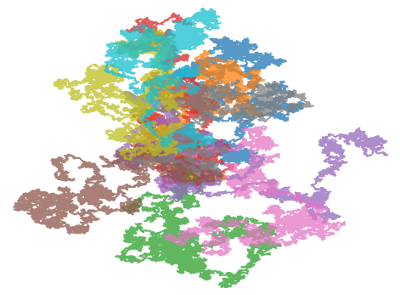 DisimpyMassively parallel Monte Carlo diffusion MR simulator written in PythonCategory: SimulationPrincipal developers: Leevi KerkeläKeywords: diffusion, Monte Carlo, simulation.Date added to MR-Hub: 2021-12-08Date software last updated: 2024-11-02No. of citations: 15(main associated paper on OpenAlex)
Description
Disimpy is a Python package for generating simulated diffusion-weighted MR signals that can be useful in the development and validation of data acquisition and analysis methods. The data is generated by Monte Carlo random walk simulations that run in massively parallel on Nvidia CUDA-capable GPUs.
References
-
 DECAES.jlA Julia package with command line and MATLAB interfaces for computing whole-brain T2-distributions in 1-2 minutes.Category: Image processingPrincipal developers: Jonathan Doucette, Christian Kames, and Alexander RauscherKeywords: MRI, Brain, Prostate, Myelin Water Imaging, Luminal Water Imaging.Date added to MR-Hub: 2021-12-06Date software last updated: 2026-09-04No. of citations: 35(main associated paper on OpenAlex)
Description
DEcomposition and Component Analysis of Exponential Signals (DECAES.jl) is a Julia package with command line and MATLAB interfaces which provides fast computations of voxelwise T2-distributions from multiecho spin-echo MRI images (Doucette et al.). This package decreases computation times from hours to minutes compared to its predecessor, the ubcmwf MATLAB toolbox from the UBC MRI Research Centre (Prasloski et al.). DECAES.jl computes T2-distributions by using regularized nonnegative least-squares (NNLS) to project measured MR signals onto basis sets of simulated MR signals computed using the extended phase graph (EPG) algorithm with stimulated echo correction. If the stimulated echo correction is turned off, DECAES.jl can be used for decomposing any multiexponential signal into its monoexponential components. T2-distributions are used in applications such as myelin water imaging (Mackay et al.) and luminal water imaging (Sabouri et al.).
References
- Doucette J, Kames C, Rauscher A. DECAES – DEcomposition and Component Analysis of Exponential Signals. Zeitschrift für Medizinische Physik 2020; 30: 271–278.
- Prasloski T, Mädler B, Xiang Q-S, et al. Applications of stimulated echo correction to multicomponent T2 analysis. Magnetic Resonance in Medicine 2012; 67: 1803–1814.
- Mackay A, Whittall K, Adler J, et al. In vivo visualization of myelin water in brain by magnetic resonance. Magnetic Resonance in Medicine 1994; 31: 673–677.
- Sabouri S, Chang SD, Savdie R, et al. Luminal Water Imaging: A New MR Imaging T2 Mapping Technique for Prostate Cancer Diagnosis. Radiology 2017; 284: 451–459.
-
 torchkbnufftA high-level, easy-to-deploy non-uniform Fast Fourier Transform in PyTorch.Category: ReconstructionPrincipal developers: Matthew J. Muckley, Ruben Stern, Tullie Murrell and Florian KnollKeywords: PyTorch, deep learning, NUFFT, reconstruction.Date added to MR-Hub: 2021-11-01Date software last updated: 2024-12-04No. of citations: 0
Description
torchkbnufft implements a non-uniform Fast Fourier Transform with Kaiser-Bessel gridding in PyTorch. The implementation is completely in Python, facilitating flexible deployment in readable code with no compilation. NUFFT functions are each wrapped as a torch.autograd.Function, allowing backpropagation through NUFFT operators for training neural networks. This package was inspired in large part by the NUFFT implementation in the Michigan Image Reconstruction Toolbox (Matlab).
References
-
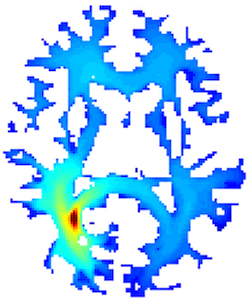 Conductance Model for Brain Structural ConnectivityMatlab toolbox for conductance-based computation of brain connectivity from Diffusion MRI.Category: ReconstructionPrincipal developers: Aina Frau-PascualKeywords: Diffusion MRI, Conductance, Tractography, Connectomics, DTI.Date added to MR-Hub: 2021-08-06Date software last updated: 2019-02-20No. of citations: 22(main associated paper on OpenAlex)
Description
This toolbox computes the structural connectivity of the brain (connectome) from diffusion-weighted MRI, using a conductance-based mathematical model introduced by Frau-Pascual et al (NeuroImage, 2019). Example scripts for HCP and ADNI are provided.
References
- A. Frau-Pascual, M. Fogarty, B. Fischl, A. Yendiki, and I. Aganj, “Quantification of structural brain connectivity via a conductance model,” NeuroImage, vol. 189, pp. 485–496, 2019.
- A. Frau-Pascual, J. Augustinack, D. Varadarajan, A. Yendiki, D. H. Salat, B. Fischl, and I. Aganj, “Conductance-based structural brain connectivity in aging and dementia,” Brain Connectivity, vol. 11, no. 7, 2021.
-
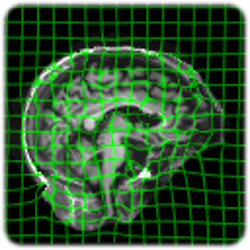 Image Segmentation and Registration in MatlabMatlab tools for unsupervised and supervised segmentation, and deformable and rigid registration of medical images.Category: Image processingPrincipal developers: Iman AganjKeywords: Segmentation, Registration, Tissue thickness measurement, Wavelet Fusion.Date added to MR-Hub: 2021-08-06Date software last updated: 2021-06-26No. of citations: 92(main associated paper on OpenAlex)
Description
These tools are useful for the following neuro- and biomedical image processing and analyses: * Unsupervised medical image segmentation based on the local center of mass. * Supervised medical image segmentation via expected-label-value computation. * Deformable registration of medical images using a mid-space-independent algorithm. * Rigid registration of multimodal images guided by segmentation. * Tissue thickness computation. * MRI image fusion and super-resolution using wavelets. * Diffusion MRI analysis.
References
-
 seeVRA Matlab toolbox for analyzing cerebro-vascular reactivity (CVR) dataCategory: ToolboxPrincipal developers: Alex A. BhogalKeywords: Vascular Reactivity, Hypercapnia, Hyperoxia, CVR, Hemodynamic Response, Cerebral Physiology.Date added to MR-Hub: 2021-08-01Date software last updated: 2026-06-14No. of citations: 9(main associated paper on OpenAlex)
Description
The seeVR toolbox consists of a series of Matlab functions designed for the analysis of hemodynamic response data. The primary purpose is to generate parametric maps of MR signal changes in response to physiological stimuli such as hypercapnia induced vasodilation or hyperoxia/hypoxia induced changes in hemoglobin saturation. The seeVR functions are also suitable for certain types of resting-state analysis, examining HRFs and probing dynamic temporal response characteristics.
References
-
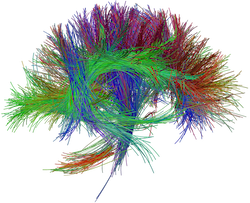 Diffusion MRI CSA-ODF and Hough TractographyMatlab toolbox for Diffusion MRI CSA-ODF computation, Hough tractography, and connectomic analysis.Category: ReconstructionPrincipal developers: Iman AganjKeywords: Diffusion MRI, Q-ball Imaging, Tractography, Connectomics, HARDI.Date added to MR-Hub: 2021-08-04Date software last updated: 2021-06-26No. of citations: 381(main associated paper on OpenAlex)
Description
This is a diffusion-weighted MRI processing Matlab toolbox (including binaries), which can be used to: * Compute the Q-Ball Imaging Orientation Distribution Function in Constant Solid Angle (CSA-ODF) (Aganj et al, MRM 2010). * Perform Hough-transform tractography (Aganj et al, MedIA 2011). * Visualize ODFs and tracts, and export them for further analysis. * Verify the correctness of the diffusion gradient table (Aganj, Sci Rep 2018). * Compute and interactively visualize the connectivity matrix. * Augment the connectivity matrix with indirect connections (Aganj et al, ISMRM 2014).
References
- I. Aganj, C. Lenglet, G. Sapiro, E. Yacoub, K. Ugurbil, and N. Harel, “Reconstruction of the orientation distribution function in single and multiple shell q-ball imaging within constant solid angle,” Magnetic Resonance in Medicine, vol. 64, no. 2, pp. 554–566, 2010.
- I. Aganj, C. Lenglet, N. Jahanshad, E. Yacoub, N. Harel, P. Thompson, and G. Sapiro, “A Hough transform global probabilistic approach to multiple-subject diffusion MRI tractography,” Medical Image Analysis, vol. 15, no. 4, pp. 414–425, 2011.
- I. Aganj, “Automatic verification of the gradient table in diffusion-weighted MRI based on fiber continuity,” Scientific Reports, vol. 8, Article no. 16541, 2018.
- I. Aganj, G. Prasad, P. Srinivasan, A. Yendiki, P. M. Thompson, and B. Fischl, “Structural brain network augmentation via Kirchhoff's laws,” in Proceedings of the Joint Annual Meeting of ISMRM-ESMRMB, Milan, Italy, 2014.
-
MRIgeneralizedBloch.jlImplementation of the generalized Bloch equations for modeling magnetization transfer.Category: SimulationPrincipal developers: Jakob AssländerKeywords: MT, magnetization transfer, modeling, qMT, quantitative magnetization transfer, Bloch.Date added to MR-Hub: 2021-07-26Date software last updated: 2026-08-18No. of citations: 29(main associated paper on OpenAlex)
Description
MRIgeneralizedBloch.jl is a Julia package that implements the generalized Bloch equations for modeling the dynamics of the semi-solid spin pool in MRI, and its exchange with the free spin pool. It utilizes the DifferentialEquations.jl package to solve integro-differential equation. It also implements a linear approximation of the generalized Bloch equations that assumes rectangular radio frequency pulses and uses matrix exponentiation of static arrays, which results in almost non-allocating and extremely fast code. For more details and scripts that reproduce all figures in the paper, please refer to above linked documentation.
References
-
 MadymC++ toolkit for DCE-MRI analysis, including baseline T1 mapping, AIF detection and tracer-kinetic model fittingCategory: Image processingPrincipal developers: Michael Berks, Geoff Parker, Gio Buonaccorsi, Anita BanerjiKeywords: DCE-MRI, tracer-kinetic modelling, T1 mapping, AIF.Date added to MR-Hub: 2021-05-19Date software last updated: 2024-03-22No. of citations: 8(main associated paper on OpenAlex)
Description
Madym is a C++ toolkit for quantitative DCE-MRI analysis developed in the QBI Lab at the University of Manchester, UK. It comprises a set of command line tools and a graphical user-interface based on an extendable C++ library. It is cross-platform, and requires few external libraries to build from source. Pre-built binaries for Windows, MacOS and Linux are available. We have also developed complementary interfaces in Matlab and python, that allow the flexibility of developing in those scripting languages, while allowing C++ to do the heavy-duty computational work of tracer-kinetic model fitting (see links below). These can either be used by building the C++ tools from source (https://gitlab.com/manchester_qbi/manchester_qbi_public/madym_cxx/-/wikis/build_instructions) or by installing them from one of the pre-built binaries (https://gitlab.com/manchester_qbi/manchester_qbi_public/madym_cxx/-/wikis/prebuilt_binaries). Note the repository linked here is a mirror of the master branch from the main project on our public GitLab group. To contribute to the project, or to view the project wiki, please visit the main repository at https://gitlab.com/manchester_qbi/manchester_qbi_public/madym_cxx
References
-
 DSI StudioA Tractography Tool for Diffusion MRI AnalysisCategory: Image processingPrincipal developers: Fang-Cheng (Frank) YehKeywords: Tractography, Fiber Tracking, Visualization, Diffusion MRI, Connectome.Date added to MR-Hub: 2021-05-17Date software last updated: 2026-09-04No. of citations: 1092(main associated paper on OpenAlex)
Description
DSI Studio is a tractography software tool that maps brain connections and correlates findings with neuropsychological disorders. It is a collective implementation of several diffusion MRI methods, including diffusion tensor imaging (DTI), generalized q-sampling imaging (GQI), q-space diffeomorphic reconstruction (QSDR), diffusion MRI connectometry, and generalized deterministic fiber tracking.
References
-
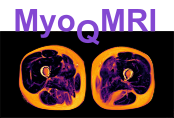 MyoQMRIFast quantitative water T2 mapping for muscle MRICategory: Image processingPrincipal developers: Francesco Santini, Matthias WeigelKeywords: Extended Phase Graph, GPU, Python, Muscle MRI, Water T2, Fat/Water Imaging.Date added to MR-Hub: 2021-03-01Date software last updated: 2026-07-30No. of citations: 31(main associated paper on OpenAlex)
Description
This project is an open-source effort to put together tools for quantitative MRI of the muscles. It is written in Python and thus portable and multiplatform. Currently, it supports GPU (cuda)-accelerated water T2 mapping from multi echo spin echo images. The fitting procedure is primarily based on extended phase graph simulation of the multi echo spin echo signal. Slice profile is taken into account. For improved accuracy, a fat fraction map can be given as an input to constrain the fitting. B1 and Fat Fraction maps are generated as a byproduct of the fitting.
References
-
 MRQyA new quality assessment and evaluation tool for MRI dataCategory: MultipurposePrincipal developers: Amir Reza Sadri, Satish E. ViswanathKeywords: Quality Control, Quality Assessment, Imaging Cohort Curation, Site Variations, Scanner Variations, Batch Effects, Foreground Detection, Metadata, Image Quality Metrics (IQMs), Processed Data.Date added to MR-Hub: 2020-08-14Date software last updated: 2026-07-13No. of citations: 55(main associated paper on OpenAlex)
Description
MRQy is a new open-source quality control and assurance tool for MR imaging data, which can be used as a pre-analytical step when developing computational pipelines including radiomics, image analysis, and machine learning. MRQy leverages a Python-JavaScript framework and has been specialized for analyzing large-scale MRI cohorts through the following modules: (i) automatic foreground detection for any MR image from anybody region, from which it will (ii) extract a series of imaging-specific metadata and quality measures generalized to work with any structural MR sequence, in order to (iii) compute representations that capture relevant MR image quality trends in a data cohort. These are presented within a specialized HTML5-based front-end which can be easily interrogated by the end-user to identify batch effects and imaging artifacts towards curation of MR imaging cohorts of acceptable quality for model development.
References
-
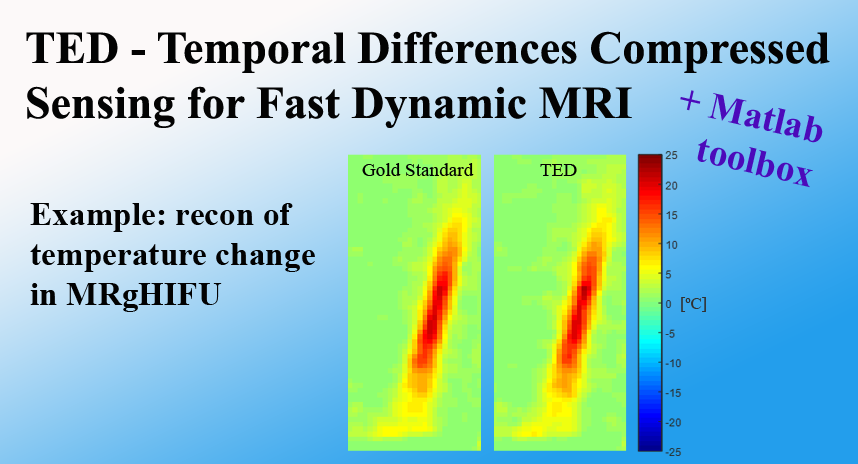 TEDA Matlab toolbox for Temporal Differences (TED) Compressed Sensing - a method for fast dynamic MRICategory: ReconstructionPrincipal developers: Efrat Shimron, William Grissom, Haim AzhariKeywords: reconstruction, dynamic MRI, single coil, parallel imaging, undersampling, sparsity, temperature reconstruction, MRgHIFU.Date added to MR-Hub: 2020-07-11Date software last updated: 2020-05-09No. of citations: 5(main associated paper on OpenAlex)
Description
TED is a Compressed Sensing method for rapid dynamic MRI which enables reconstruction from highly subsampleded k-space data. It was demonstrated in our paper for reconstruction of temperature change in MR-guided-HIFU, yet it is general and hence can be applied to other dynamic MRI datasets. It is suitable for single-coil and multi-coil acquisitions.
References
-
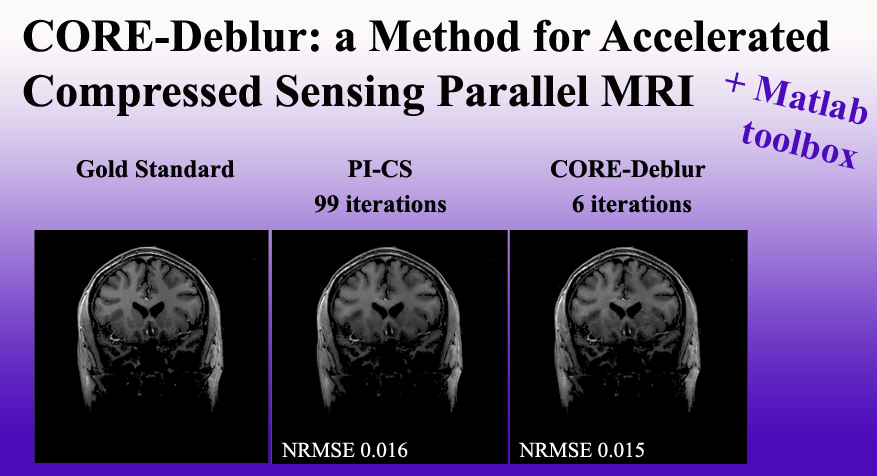 CORE-DeblurA Matlab toolbox for CORE-Deblur - a method for accelerating Compressed Sensing Parallel MRI reconstructionCategory: ReconstructionPrincipal developers: Efrat Shimron, Andrew Webb, Haim AzhariKeywords: reconstruction, parallel imaging, Compressed Sensing, undersampling, sparsity.Date added to MR-Hub: 2020-07-11Date software last updated: 2020-05-14No. of citations: 4(main associated paper on OpenAlex)
Description
CORE-Deblur is a general parallel-MRI reconstruction method which reduces the number of Compressed Sensing iterations by 10-fold. This toolbox includes Matlab code and demonstrations of the method for in-vivo datasets
References
-
 ExploreASLPipeline and toolbox for image processing, QC and visualization of arterial spin labeling perfusion MR imagesCategory: Image processingPrincipal developers: Henk Mutsaerts, Jan Petr, Michael Stritt, Pieter Vandemaele, Paul GrootKeywords: ASL, perfusion, MRI, image processing, quality control, clinical.Date added to MR-Hub: 2020-07-07Date software last updated: 2023-09-07No. of citations: 136(main associated paper on OpenAlex)
Description
ExploreASL is designed as a multi-OS, open source, collaborative framework that facilitates cross-pollination between image processing method developers and clinical investigators. It is based on Matlab, SPM, CAT12, LST. ExploreASL provides a complete head - to - tail approach that runs fully automatically, encompassing all necessary tasks from data import and structural segmentation, registration and normalization, up to CBF quantification.In addition, the software package includes and quality control(QC) procedures and region - of -interest(ROI) as well as voxel - wise analysis on the extracted data.To - date, ExploreASL has been used for processing~10000 ASL datasets from all major MRI vendors and ASL sequences, and a variety of patient populations, representing~30 studies.The ultimate goal of ExploreASL is to combine data from multiple studies to identify disease related perfusion patterns that may prove crucial in using ASL as a diagnostic took and enhance our understanding of the interplay of perfusion and structural changes in neurodegenerative pathophysiology. Additionally, this (semi-) automatic pipeline allows us to minimize manual intervention, which increases the reproducibility of studies.
References
-
 QMRITools`QMRITools` is written in Mathematica using Wolfram Workbench and Eclipse and contains a collection of tools and functions for processing quantitative MRI data.Category: MultipurposePrincipal developers: Martijn FroelingKeywords: Diffusion tensor imaging, Mathematica, Image Analysis, Simulation, Visualisation, Spectroscopy, Image processing, Cardiac MRI, Dixon reconstruction, EPG based T2 fitting.Date added to MR-Hub: 2020-05-25Date software last updated: 2026-09-04No. of citations: 42(main associated paper on OpenAlex)
Description
QMRITools is written in Mathematica using Wolfram Workbench and Eclipse and contains a collection of tools and functions for processing quantitative MRI data. The toolbox does not provide a GUI and its primary goal is to allow for fast and batch data processing, and facilitate development and prototyping of new functions. The core of the toolbox contains various functions for data manipulation and restructuring. The toolbox was developed mostly in the context of quantitative muscle (Froeling et al. 2012), nerve and cardiac magnetic resonance imaging. The library of functions grows along with the research it is used for and started as a toolbox to analyze DWI data of muscle. Since then it has grown to include many other features such as cardiac analysis (tagging and T1 mapping), dixon reconstruction, EPG modeling and fitting, j-coupling simulations and more. It currently contains over 350 custom functions (over 20.000 lines of code) complete with documentation and demonstrations.
References
- JOSS publication. QMRTools: a Mathematica toolbox for quantitative MRI analysis.
- First use of the toolbox. Diffusion‐tensor MRI reveals the complex muscle architecture of the human forearm
- First reproducibility evaluation. Reproducibility of diffusion tensor imaging in human forearm muscles at 3.0 T in a clinical setting
- Recent multi center validation. Multi‐center evaluation of stability and reproducibility of quantitative MRI measures in healthy calf muscles
-
 CORE-PIA Matlab toolbox for CORE-PI - a parameter-free parallel MRI reconstruction methodCategory: ReconstructionPrincipal developers: Efrat Shimron, Andrew Webb, Haim AzhariKeywords: reconstruction, parallel imaging, undersampling, sparsity, parameter-free, wavelet.Date added to MR-Hub: 2019-12-25Date software last updated: 2020-05-09No. of citations: 3(main associated paper on OpenAlex)
Description
CORE-PI is a general parallel-MRI reconstruction method. It is linear (non-iterative) and does not require calibration of any parameters. This toolbox includes Matlab code for implementing CORE-PI and demonstrations of the method for a simulated phantom and in-vivo datasets
References
-
 MRIReco.jlMRIReco.jl: Julia Package for Image ReconstructionCategory: ReconstructionPrincipal developers: Tobias Knopp, Mirco GrosserKeywords: reconstruction, julia, compressed sensing, field inhomgeneity, sparse sampling, NFFT, ISMRMRD.Date added to MR-Hub: 2019-10-16Date software last updated: 2026-08-17No. of citations: 2(main associated paper on OpenAlex)
Description
An Extensible and Modular Open-Source Image Reconstruction Framework written in Julia
References
-
 NLSAMNon Local Spatial and Angular Matching (NLSAM) denoising algorithm for diffusion MRICategory: ReconstructionPrincipal developers: Samuel St-JeanKeywords: Diffusion MRI, denoising, python.Date added to MR-Hub: 2019-06-19Date software last updated: 2026-08-16No. of citations: 83(main associated paper on OpenAlex)
Description
The reference implementation for the Non Local Spatial and Angular Matching (NLSAM) denoising algorithm for diffusion MRI
References
-
 GannetOpen-source, MATLAB-based software for automated processing and quantification of edited MRS data.Category: SpectroscopyPrincipal developers: Richard Edden, Mark Mikkelsen, Georg Oeltzschner, Muhammad Saleh, Nicolaas Puts, C. John Evans (former), Ashley Harris (former)Keywords: magnetic resonance spectroscopy, edited MRS, GABA, GitHub, MATLAB.Date added to MR-Hub: 2019-06-10Date software last updated: 2019-01-24No. of citations: 679(main associated paper on OpenAlex)
Description
Gannet is an open-source, MATLAB-based toolkit for automated loading, processing, and analysis of spectral-edited MRS data. It can batch-process multiple datasets and comprises a number of modules for a full analysis pipeline, including: data loading, signal fitting, voxel co-registration to structural MR images, tissue segmentation, and tissue correction. Presently, Gannet is able to process edited MRS data from the three major vendors and is compatible with all vendor-specific file formats. Data acquired by the following editing approaches are compatible: MEGA-PRESS, HERMES, HERCULES.
References
- Edden RAE, Puts NAJ, Harris AD, Barker PB, Evans CJ. Gannet: A batch-processing tool for the quantitative analysis of gamma-aminobutyric acid-edited MR spectroscopy spectra. J. Magn. Reson. Imaging 2014;40:1445–1452
- Harris AD, Puts NAJ, Edden RAE. Tissue correction for GABA-edited MRS: Considerations of voxel composition, tissue segmentation, and tissue relaxations. J. Magn. Reson. Imaging 2015;42:1431–1440 doi: 10.1002/jmri.24903.
-
 GPI (Graphical Programming Interface)Graphical integrated development environment for scientific algorithmsCategory: MultipurposePrincipal developers: Ashley Anderson, Daniel Borup, Nick ZwartKeywords: programming, graphical, development, collaboration, teaching, reconstruction, ide.Date added to MR-Hub: 2019-05-30Date software last updated: 2026-06-06No. of citations: 53(main associated paper on OpenAlex)
Description
The goal of GPI is to minimize the barrier to organizing and developing complex scientific algorithms. GPI can be thought of as an integrated development environment for Python -- algorithm elements (i.e., nodes) can be linked together to form a flow diagram that is then executed according to the diagram hierarchy. At the node level, the common API and UI elements allow other developers to easily integrate and use your code. The visual and modular nature of GPI also allows concise communication of your work with your collaborators and provides an intuitive mechanism for others to start interacting with your research.
References
-
 Water/Fat Separated MR ThermometryAlgorithm to compute PRF-shift based MR thermometry in mixed water and fatty tissues, while also accounting for errors due to motion and scanner drift.Category: ReconstructionPrincipal developers: Megan Poorman, William GrissomKeywords: proton resonance frequency shift, temperature mapping, fat separation, thermometry.Date added to MR-Hub: 2019-05-29Date software last updated: 2018-09-26No. of citations: 24(main associated paper on OpenAlex)
Description
This code repository, written in Matlab, implements an algorithm for real-time-compatible water/fat separated MR thermometry in aqueous and fatty tissues. It is based on a hybrid referenceless multi-baseline thermometry approach and is robust to errors from motion, respiration, and scanner drift. The algorithm should be accurate in tissues containing between 0% and 90% fat. A numerical phantom and demo simulation is provided to guide the user in implementation of the algorithm for their own application.
References
-
 MRtrix3Advanced tools for the analysis of diffusion MRI dataCategory: Image processingPrincipal developers: J-Donald Tournier, Robert E. Smith, David Raffelt, Maximilian Pietsch, Rami Tabarra, Daan Christiaens, Thijs Dhollander, Ben Jeurissen, Chun-Hung YehKeywords: diffusion, tractography, spherical deconvolution, ODF.Date added to MR-Hub: 2019-05-10Date software last updated: 2026-08-12No. of citations: 3268(main associated paper on OpenAlex)
Description
MRtrix provides a set of tools to perform various advanced diffusion MRI analyses, including constrained spherical deconvolution (CSD), probabilistic tractography, track-density imaging, and apparent fibre density.
References
-
 gammaSTARgammaSTAR: Platform-Independent MR Sequence DevelopmentCategory: Pulse sequencesPrincipal developers: Cristoffer Cordes, Simon Konstandin, Daniel Hoinkiss, Daniel Mensing, Saulius Archipovas, Robin Wilke, Matthias GüntherKeywords: sequence, development, lua, c++, pulseq, pulse sequences, vendor neutrality, Video tutorial, Docker.Date added to MR-Hub: 2019-05-29Date software last updated: 2020-01-29No. of citations: 38(main associated paper on OpenAlex)
Description
gammaSTAR is an MRI pulse sequence development framework. gammaSTAR sequences are vendor-independent, self-contained and portable. They and can be configured to match hardware limitations and desired protocol settings after being loaded onto a device. The core logic is written in the scripting language Lua, which is easily embeddable into C/C++ frameworks, resulting in very low-footprint driver implementations. Sequences can be viewed, configured and shared through a web-technology based tool that requires no internet or network access, running completely in-browser. Sequence computation is made efficient by exploiting the underlying directed acyclic graph structure for essentially all parameter calculations. gammaSTAR is designed to enable modular sequence development and state-of-the-art MRI techniques.
References
-
 SigPyCPU/GPU Python package for iterative reconstructionCategory: ReconstructionPrincipal developers: Frank OngKeywords: iterative-reconstruction, compressed sensing, GPU, ESPIRiT, GPU-NUFFT, GitHub, Python.Date added to MR-Hub: 2019-05-23Date software last updated: 2024-12-27No. of citations: 0
Description
SigPy is a Python package for signal processing, with emphasis on iterative methods. It is built to operate directly on NumPy arrays on CPU and CuPy arrays on GPU. SigPy also provides several domain-specific submodules: sigpy.plot for multi-dimensional array plotting, sigpy.mri for MRI iterative reconstruction, and sigpy.learn for dictionary learning.
References
-
 retroMoCoBoxMATLAB-based retrospective motion-correction of 3D k-spaceCategory: ReconstructionPrincipal developers: Daniel GallichanKeywords: Github, MATLAB, motion-correction, k-space.Date added to MR-Hub: 2019-05-23Date software last updated: 2026-07-24No. of citations: 168(main associated paper on OpenAlex)
Description
Matlab toolbox for retrospective motion-correction of 3D MRI k-space data - as used for my work using 3D FatNavs to obtain the motion information. Example data is provided to give an indication of what the toolbox can be used for - including how to simulate the effect of different motion profiles on an acquisition. As this code needs to be able to do the full reconstruction pipeline, it also contains an implementation of 2D GRAPPA. The motion-corrected k-space is regridded using the NUFFT from Jeffrey Fessler's MIRT toolbox (separate download).
References
- Retrospective correction of involuntary microscopic head movement using highly accelerated fat image navigators (3D FatNavs) at 7T, Gallichan, Marques and Gruetter, MRM 2015
- Optimizing the acceleration and resolution of three-dimensional fat image navigators for high-resolution motion correction at 7T, Gallichan and Marques, MRM 2016
- Motion-Correction Enabled Ultra-High Resolution In-Vivo 7T-MRI of the Brain, Federau and Gallichan, Plos One 2016
- Evaluation of 3D fat-navigator based retrospective motion correction in the clinical setting of patients with brain tumors, Glessgen, Gallichan, Moor, Hainc and Federau, Neuroradiology 2019
-
 Berkeley Advanced Reconstruction Toolbox (BART)Reconstruction toolbox and programming library for parallel imaging and compressed sensing available for Linux, Mac OS X, and Windows.Category: ReconstructionPrincipal developers: BART DevelopersKeywords: GPU, ESPIRiT, NUFFT, iterative-reconstruction, compressed sensing, non-Cartesian, parallel imaging, machine learning.Date added to MR-Hub: 2019-05-10Date software last updated: 2026-08-03No. of citations: 1419(main associated paper on OpenAlex)
Description
The Berkeley Advanced Reconstruction Toolbox (BART) is a free and open-source image-reconstruction framework for Computational Magnetic Resonance Imaging. It consists of a programming library (for C/C++) and a toolbox of command-line programs. The library provides common operations on multi-dimensional arrays, (non-uniform) Fourier and wavelet transforms, as well as generic implementations of iterative optimization algorithms (CG, IST, FISTA, ADMM, IRGNM, Chambolle–Pock, ADAM, iPALM, ...) supporting various types of regularization terms (l2, l1-wavelet, total-variation, low-rank, multi-scale low-rank ...). Parallel computation on multi-core systems and on Graphical Processing Units (GPUs) is supported. The command-line tools provide direct access to basic operations on multi-dimensional arrays as well as efficient implementations of many calibration and reconstruction algorithms for parallel imaging and compressed sensing (SENSE, ESPIRiT, NLINV, SAKE, PI-CS, ...).
References
- Martin Uecker, Peng Lai, Mark J. Murphy, Patrick Virtue, Michael Elad, John M. Pauly, Shreyas S. Vasanawala, and Michael Lustig. ESPIRiT - An Eigenvalue Approach to Autocalibrating Parallel MRI: Where SENSE meets GRAPPA. Magn Reson Med 2014; 71:990-1001
- Martin Uecker, Patrick Virtue, Frank Ong, Mark J. Murphy, Marcus T. Alley, Shreyas S. Vasanawala, and Michael Lustig. Software Toolbox and Programming Library for Compressed Sensing and Parallel Imaging. ISMRM Workshop on Data Sampling and Image Reconstruction, Sedona 2013
- Martin Uecker, Frank Ong, Jonathan I Tamir, Dara Bahri, Patrick Virtue, Joseph Y Cheng, Tao Zhang, and Michael Lustig. Berkeley Advanced Reconstruction Toolbox. Annual Meeting ISMRM, Toronto 2015, In Proc. Intl. Soc. Mag. Reson. Med. 23:2486
- Jonathan I Tamir, Frank Ong, Joseph Y Cheng, Martin Uecker, and Michael Lustig. Generalized Magnetic Resonance Image Reconstruction using The Berkeley Advanced Reconstruction Toolbox. ISMRM Workshop on Data Sampling and Image Reconstruction, Sedona 2016
- Martin Uecker. Machine Learning Using the BART Toolbox - Implementation of a Deep Convolutional Neural Network for Denoising. Joint Annual Meeting ISMRM-ESMRMB, Paris 2018, In Proc. Intl. Soc. Mag. Reson. Med. 26;2802
-
 GadgetronGeneral-purpose, open source, medical imaging reconstruction framework.Category: ReconstructionPrincipal developers: Hui Xue, David Hansen, Adrienne Campbell-WashburnKeywords: GitHub, Video tutorial, GPU, inline, online, streaming, AI, machine learning, compressed sensing, non-Cartesian, parallel imaging, vendor neutrality.Date added to MR-Hub: 2019-05-10Date software last updated: 2025-04-07No. of citations: 338(main associated paper on OpenAlex)
Description
Gadgetron is an Open Source, general-purpose medical imaging reconstruction framework written primarily in C++. It consists of two main components: 1) a set of versatile toolboxes for image signal processing, and 2) a modular, high performance framework for streaming data processing. The streaming framework uses a client server model where the reconstruction job is performed on a server and the client is responsible for sending data and receiving imaging. Clients can be stand-alone command line clients or an imaging device could serve as a client. The framework supports easy prototyping with scripting languages such as Python while supporting transparent integration in clinical work flows. For MRI applications, the Gadgetron supports the vendor independent ISMRM Raw Data format and it comes with high performance image reconstruction pipelines for many standard MRI sequences. Example applications include Cartesian and non-Cartesian parallel imaging, non-linear reconstruction and motion correction. Several performance critical components such as the non-Cartesian Fourier transform have been implemented on GPUs for improved performance. The framework can be used as a complete reconstruction package or the toolboxes can be leveraged in other applications.
References
-
 gpuNUFFTC++ CUDA accelerated non-uniform FFT for arbitrary 2D/3D data with direct Matlab interface on Windows and LinuxCategory: ReconstructionPrincipal developers: Andreas Schwarzl, Florian KnollKeywords: GitHub, Video tutorial, GPU, NUFFT.Date added to MR-Hub: 2019-05-10Date software last updated: 2022-02-06No. of citations: 39(main associated paper on OpenAlex)
Description
The computational expensive non-uniform FFT is implemented in C++ by utilizing the NVIDIA CUDA architecture, in order to speed up the execution of the 2D/3D multi-coil Gridding step for arbitrarily shaped k-space data. The software offers a ready-to-use interface to Matlab, similar to the well-known NUFFT Toolbox by Fessler et al., in order to seamlessly enhance the preferred Matlab prototyping process at an early stage. The gpuNUFFT supports the growing importance of non-Cartesian 2D/3D trajectories in the context of iterative image reconstruction, parallel imaging, and compressed sensing by reducing the long computation times during NUFFT operations. Depending on the data size and shape, speedups up to a factor of 40 are possible.
References
-
 ISMRMRDVendor-neutral MRI raw data format based on standard developed by a subcommittee of the ISMRM Sedona 2013 workshopCategory: Data formatPrincipal developers: See full list of developers.Keywords: GitHub, raw data, k-space, vendor neutrality.Date added to MR-Hub: 2019-05-10Date software last updated: 2026-05-05No. of citations: 120(main associated paper on OpenAlex)
Description
A prerequisite for sharing MRI reconstruction software is a data format that describes typical MRI raw datasets in a vendor neutral manner. The ISMRM Raw Data format is a proposal for such a common MR raw data format, which promotes algorithm and data sharing. The file format consists of a flexible header and tagged frames of k-space data. These data elements are stored in an HDF5 file container. Application Programming Interfaces are available for C/C++, MATLAB, and Python. Converters for Bruker, General Electric, Philips, and Siemens proprietary file formats also available (implemented in C++). The proposed raw data format solves a practical problem for the magnetic resonance imaging community. It may serve as a foundation for reproducible research and collaborations. The ISMRM Raw Data format is a completely open and community-driven format, and the scientific community is invited (including commercial vendors) to participate either as users or developers.
References
-
 Low Field SimulatorThis package is a MATLAB based tool for simulating low-field MRI acquisitions based on high-field acquisition, enables prediction of the minimum field strength requirements for a broad range of MRI techniques.Category: SimulationPrincipal developers: Weiyi Chen, Ziyue Wu, Krishna S. NayakKeywords: GitHub, low field.Date added to MR-Hub: 2019-05-10Date software last updated: 2016-07-12No. of citations: 13(main associated paper on OpenAlex)
Description
This package is to develop and evaluate a framework for simulating low-field proton-density weighted MRI acquisitions based on high-field acquisitions, which could be used to predict the minimum B0 field strength requirements for MRI techniques.
Given MRI raw data, lower field MRI acquisitions can be simulated based on the signal and noise scaling with field strength. Certain assumptions are imposed for the simulation. This package also contains two examples of proton-density weighted MRI applications that demonstrated estimation of minimum field strength requirements: real-time upper airway imaging and liver proton-density fat fraction measurement. More detailed description of the examples can be found in the published reference.
This package enables prediction of the minimum field strength requirements for a broad range of MRI techniques, and would be particularly useful in the evaluation of de-noising and constrained reconstruction techniques.
References
-
 PulseqAn open source framework for platform-independent MR pulse sequence development and executionCategory: Pulse sequencesPrincipal developers: Original author: Kelvin Layton (left the MR field)
Current developers: Stefan Kroboth, Maxim Zaitsev (Siemens-specific), Jon-Fredrik Nielsen (GE specific), Jochen Leupold (Bruker-specific), Tony Stoecker (JEMRIS)Keywords: GitHub, pulse sequences, vendor neutrality.Date added to MR-Hub: 2019-05-10Date software last updated: 2026-07-23No. of citations: 222(main associated paper on OpenAlex)Description
Pulseq is an open source framework for the development, representation and execution of magnetic resonance (MR) sequences. A central contribution of this project is an open file format to compactly describe MR sequences suitable for execution on an MRI scanner or NMR spectrometer. MATLAB and C++ source code is provided for reading and writing sequence files. An interface for exporting JEMRIS sequences to Pulseq format is available. For the execution of the Pulseq files on the particular platform an additional interpreter pulse sequence is required, which is made available via the corresponding manufacturer's community site or can be acquired directly from the authors.
References
-
 MRiLabA rapid and versatile numerical MRI simulator with Matlab interface and GPU parallel acceleration on Windows and Linux
Description
The MRiLab is a numerical MRI simulation package. It has been developed and optimized to simulate MR signal formation, k- space acquisition and MR image reconstruction. MRiLab provides several dedicated toolboxes to analyze RF pulse, design MR sequence, configure multiple transmitting and receiving coils, investigate magnetic field related properties and evaluate real-time imaging technique. The main MRiLab simulation platform combined with those toolboxes can be applied to customize various virtual MR experiments which can serve as a prior stage for prototyping and testing new MR technique and application.
The MRiLab features highly interactive graphical user interface (GUI) for the convenience of fast experiment design and technique prototyping. High simulation accuracy is achieved by simulating discrete spin evolution at small time interval using the Bloch-equation and appropriate tissue model. In order to manipulate large multidimensional spin array, MRiLab employs parallel computing by incorporating latest graphical processing unit (GPU) technique and multi-threading CPU technique. With efficient parallelization, MRiLab can accomplish multidimensional multiple spin species MR simulation at high simulation accuracy and time efficiency, and with low computing hardware cost.
References
- F. Liu, J.V. Velikina, W.F. Block, R. Kijowski, A.A. Samsonov. Fast Realistic MRI Simulations Based on Generalized Multi-Pool Exchange Tissue Model. IEEE Transactions on Medical Imaging. 2016.
- F. Liu, R. Kijowski, W.F. Block. Performance of Multiple Types of Numerical MR Simulation using MRiLab. In 2014 Proc. Intl. Soc. Mag. Reson. Med. Milan.
- F. Liu, R. Kijowski, W.F. Block. MRiLab: Performing Fast 3D Parallel MRI Numerical Simulation on A Simple PC. In 2013. Proc. Intl. Soc. Mag. Reson. Med. Salt Lake City.
-
 NYU MR-Fingerprinting Reconstruction ToolboxReconstruction of quantitative maps of arbitrary MR Fingerprinting data with arbitrary k-space trajectories on all platforms supporting Matlab.Category: ReconstructionPrincipal developers: Jakob AssländerKeywords: Bitbucket, fingerprinting, NUFFT, quantitative imaging, relaxometry.Date added to MR-Hub: 2019-05-10Date software last updated: 2019-08-06No. of citations: 216(main associated paper on OpenAlex)
Description
The NYU MR-Fingerprinting Reconstruction Toolbox provides a general and fast framework for reconstructing MRF data. It approximates the fingerprints in a low rank space, which improves the conditioning of the problem and reduces the number of FFT operations significantly. The provided code solves the MRF reconstruction problem with an alternating direction method of multipliers, which transform the non-convex optimization problem into two subproblems, that are very similar to CG-SENSE and the dictionary fitting, respectively. The toolbox is implemented in Matlab and incorporates Fessler’s nuFFT implementation.
References
-
 QUITA set of tools for quantitative imaging, principally relaxometryCategory: Image processingPrincipal developers: Tobias WoodKeywords: GitHub, quantitative imaging, relaxometry.Date added to MR-Hub: 2019-05-10Date software last updated: 2026-06-24No. of citations: 62(main associated paper on OpenAlex)
Description
QUIT provides implementations of multiple quantitative MRI algorithms as command-line tools written in C++ and using the high-quality Insight Toolkit [@ITK], CERES [@CERES] and Eigen [@Eigen] libraries. They are multi-threaded where-ever possible. They are easy to include into shell-script based processing pipelines, and are easy to use with a queue system such as the Sun Grid Engine. They are hence suitable for the high-throughput processing that is required for timely analysis of a large neuroimaging study.
References
- Wood, (2018). QUIT: QUantitative Imaging Tools . Journal of Open Source Software, 3(26), 656
- Wood, T. C., Simmons, C., Hurley, S. A., Vernon, A. C., Torres, J., Dell’Acqua, F., ... Cash, D. (2016). Whole-brain ex-vivo quantitative MRI of the cuprizone mouse model. PeerJ, 4, e2632
- Vanes, L. D., Mouchlianitis, E., Wood, T. C., & Shergill, S. S. (2018). White matter changes in treatment refractory schizophrenia: Does cognitive control and myelination matter? NeuroImage: Clinical, 18, 186–191
-
 JEMRISGeneral-purpose, open source, MRI simulation framework available for Linux, Mac and Windows.Category: SimulationPrincipal developers: Tony Stöcker, Daniel Pflugfelder, Kaveh VahedipourKeywords: GitHub, parallel computing, arbitrary waveforms.Date added to MR-Hub: 2019-05-10Date software last updated: 2025-06-23No. of citations: 151(main associated paper on OpenAlex)
Description
JEMRIS is an extensible MRI simulation framework which provides a versatile MRI sequence development and simulation environment. The development was driven by the desire to achieve generality of simulated 3D MRI experiments reflecting modern MRI systems hardware. The accompanying computational burden is overcome by means of parallel computing. Many aspects of general MRI simulations are covered such as parallel transmit and receive, important off-resonance effects, non-linear gradients, and arbitrary spatiotemporal parameter variations at different levels. The latter can be used to simulate various types of spin motion, e.g. rigid motion, diffusion or flow. JEMRIS is written in C++ and can be used from the command line. The MR experiment configuration is done in XML format and binary I/O utilizes the HDF5 standard. For convenience JEMRIS can also be used via dedicated MATLAB graphical user interfaces. For instance, complex MRI sequences with arbitrary waveforms and inter-dependent modules can be modeled without any programming involved.
References
-
 Spinal Cord Toolbox (SCT)Software package to analyze multi-parametric MRI of the spinal cord, available for Linux, OSX and Windows.Category: Image processingPrincipal developers: Please see here for full listKeywords: GitHub, spine, templates, atlases.Date added to MR-Hub: 2019-05-10Date software last updated: 2026-09-02No. of citations: 652(main associated paper on OpenAlex)
Description
SCT is a comprehensive and open-source library of analysis tools for multi-parametric MRI of the spinal cord, written in Python and available for Linux, OSX and Windows. It includes templates and atlases of the spinal cord along with state-of-the-art methods for automatic segmentation, registration and metric atlas-based analysis.
References
-
 qMRLabqMRLab is a MATLAB/Octave open-source software for quantitative MR image analysis and simulation.Category: Image processingPrincipal developers: Agah Karakuzu, Mathieu Boudreau, Tanguy Duval, Ilana R. Leppert, Tommy Boshkovski, Julien Cohen-Adad, Nikola StikovKeywords: GitHub, Docker, quantitative imaging.Date added to MR-Hub: 2019-05-10Date software last updated: 2026-08-16No. of citations: 53(main associated paper on OpenAlex)
Description
qMRLab is an open-source software for quantitative MR image analysis. The main goal is to provide the community with an intuitive tool for data fitting, plotting, simulation and protocol optimization for a myriad of different quantitative models. The modularity of the implementation makes it easy to add any additional modules and we encourage everyone to contribute their favorite recipe for qMR.
References
-
 Yarra FrameworkOpen-source toolkit to support the development and clinical translation of reconstruction techniquesCategory: ReconstructionPrincipal developers: Kai Tobias Block, Roy WigginsKeywords: Bitbucket, offline, compressed sensing, Matlab, Siemens.Date added to MR-Hub: 2019-07-03Date software last updated: 2024-04-25No. of citations: 0
Description
Yarra is a collection of software tools to support the development and clinical translation of novel MRI reconstruction techniques. The functional scope ranges from automatic collection of clinical raw-data, management and anonymization of raw-data, clinical integration of reconstruction prototypes, and distribution of reconstruction algorithms. Moreover, Yarra provides functions for clinical workflow monitoring and analysis. Support is currently limited to Siemens MRI systems.
References
-
 DIPYScientific computing software and community-driven medical imaging organizationCategory: MultipurposePrincipal developers: Eleftherios Garyfallidis, Matthew Brett, Bagrat Amirbekian, Ariel Rokem, Stefan van der Walt, Maxime Descoteaux, Ian Nimmo-Smith and DIPY ContributorsKeywords: DTI, DKI, dMRI, diffusion MRI, neuroimaging, tractography, Diffusion Imaging In Python, ODF, registration.Date added to MR-Hub: 2020-01-27Date software last updated: 2026-09-04No. of citations: 1489(main associated paper on OpenAlex)
Description
DIPY is the paragon 3D/4D+ imaging library in Python. Contains generic methods for spatial normalization, signal processing, machine learning, statistical analysis and visualization of medical images. Additionally, it contains specialized methods for computational anatomy including diffusion, perfusion and structural imaging.
References
-
 GrOptA Gradient Optimization Toolbox for finding time optimal MR encoding gradientsCategory: Pulse sequencesPrincipal developers: Michael LoecherKeywords: Numerical Optimization, Pulse Sequence Design, Diffusion MRI, PC-MRI, Waveform design.Date added to MR-Hub: 2024-02-07Date software last updated: 2025-06-01No. of citations: 18(main associated paper on OpenAlex)
Description
GrOpt is a toolbox for finding time-optimal gradient waveforms for pulse sequence development from a list of constraints. It is designed to operate as fast as possible to enable on-the-fly optimizations that can be run on the scanner. The underlying optimization is written in C/C++, with wrappers for Matlab and Python.
References